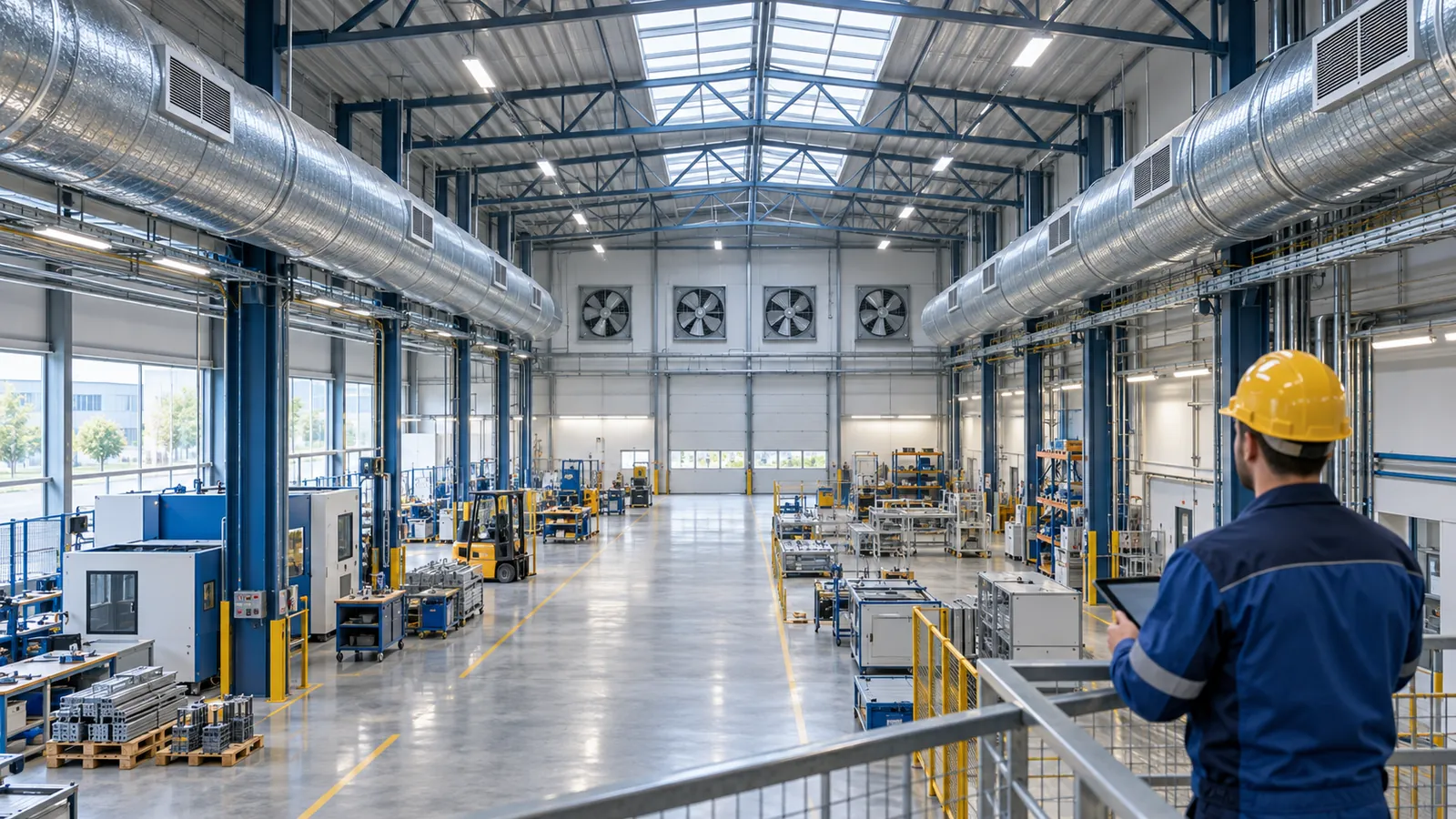
Calculating air changes per hour (ACH) is a fundamental parameter in the design of industrial ventilation systems. It determines how many times the total volume of air in a space is renewed in one hour.
To calculate the required ACH, we first need to know the volume of the space (length × width × height). Then, depending on the type of activity carried out in the building, a recommended number of air changes per hour is set. For example, a conventional warehouse may require between 3 and 6 ACH, while an area with a high heat or gas load may need 10 to 20 ACH.
The basic formula is: ACH = (Airflow in m³/h) / (Volume of the space in m³). The airflow is the sum of the flow rates of the installed exhaust fans and ventilators.
It is important to consider additional factors such as the internal heat load (machinery, lighting, staff), the outdoor temperature, relative humidity and how the airflow is distributed inside the building. A poor design can create dead zones with no proper air renewal.
At Proreg we run this technical calculation before installing any industrial exhaust or ventilation system, making sure the airflow meets the applicable standards and the specific needs of each plant.